TPU vs PVC Inflatable Mattress — Durability, Weight & Safety Comparison (2026 Data)
TPU vs PVC inflatable mattress comparison with test data: 8-12 yr vs 1-3 yr lifespan, 30% lighter, -30°C cold resistance, zero off-gassing. Why outdoor brands are switching to TPU.
The Material That Defines Your Mattress Quality
When shopping for an inflatable mattress — whether for camping, car sleeping, or home guest use — the single most important factor is the material. The two dominant materials in the inflatable mattress industry are TPU (Thermoplastic Polyurethane) and PVC (Polyvinyl Chloride). While both can create functional inflatable products, they differ dramatically in performance, health safety, environmental impact, and longevity.
This comprehensive guide breaks down every meaningful difference between TPU and PVC, backed by standardized test data and real-world performance observations from Takibi Outdoor's 25 years of materials R&D.
By the end of this article, you will understand exactly why the outdoor industry is rapidly shifting from PVC to TPU — and why that shift matters for your health, your comfort, and the environment.
What Is TPU? (Thermoplastic Polyurethane)
TPU is a class of polyurethane plastic with unique properties: it is inherently elastic (flexible without any chemical additives), thermoplastic (can be melted and reshaped), and extremely durable. First developed for industrial applications like hydraulic seals and medical tubing, TPU has been adopted by the outdoor industry as a premium alternative to PVC for inflatable products.
Key Properties of TPU:
- Inherent flexibility — No plasticizers needed; the polymer chain itself is flexible
- Zero odor — No volatile additives means zero off-gassing
- Extreme temperature range — Remains flexible from -30°C to +90°C
- Superior tear strength — >80 N/mm per ASTM D1004
- Recyclable — Can be melted and reformed at end of life
- Biocompatible — Used in medical devices (ISO 10993 compliant grades available)
At Takibi Outdoor, we go a step further: we formulate and extrude our own proprietary TPU compound in-house. This vertical integration gives us control over Shore hardness (85A-95A), tensile strength (>40 MPa per ASTM D412), and elongation at break (>500%) — specifications that exceed generic off-the-shelf TPU film.
What Is PVC? (Polyvinyl Chloride)
PVC is the world's third-most widely produced synthetic plastic. In its rigid form, PVC is used for pipes and window frames. For inflatable products, PVC must be plasticized — meaning chemical additives (typically phthalates like DEHP, DINP, or DIDP) are mixed in to make the rigid plastic soft and flexible.
Key Properties of PVC:
- Requires plasticizers — Phthalate additives needed for flexibility (25-40% by weight)
- Strong chemical odor — Plasticizers off-gas VOCs, especially when new
- Cold-sensitive — Stiffens below 0°C, becomes brittle at -10°C
- Lower tear strength — ~30 N/mm (ASTM D1004)
- Difficult to recycle — Contains chlorine; releases HCl when burned
- Low cost — Raw material costs are 40-60% lower than TPU
Detailed Comparison: TPU vs PVC for Inflatable Mattresses
1. Weight and Portability
TPU achieves the same mechanical strength as PVC at significantly less material thickness. In practical terms, a Takibi TPU20 Double mattress (200x140cm) weighs approximately 5kg, while an equivalent PVC mattress weighs 7kg or more. This 30% weight reduction makes a meaningful difference for car campers, backpackers, and anyone who needs to carry or store their mattress.
The thinner material also means TPU mattresses pack down to a smaller volume — typically 40% less packed size than PVC equivalents.
2. Odor and Chemical Safety
This is arguably the most significant difference between TPU and PVC, especially for car mattresses used in enclosed vehicle cabins.
PVC inflatable mattresses contain 25-40% phthalate plasticizers by weight. These plasticizers slowly migrate out of the material over time — a process called "plasticizer migration" — releasing volatile organic compounds (VOCs) into the surrounding air. The characteristic "new plastic smell" from a PVC air mattress is actually phthalate off-gassing. In a closed car cabin, these VOCs reach concentrations that can cause headaches, eye irritation, and nausea.
TPU is chemically distinct: its polymer backbone is inherently flexible without any plasticizer additives. A TPU mattress has zero chemical odor the moment you unpack it. Takibi Outdoor's TPU is tested as BPA-free, phthalate-free, and formaldehyde-free per SGS laboratory analysis.
3. Temperature Performance
Temperature resistance is critical for outdoor mattresses that must perform in environments ranging from desert heat to alpine cold.
| Property | TPU (Takibi) | PVC |
|---|---|---|
| Low-temp flexibility | Fully flexible at -30°C | Stiffens at 0°C, brittle at -10°C |
| Heat resistance | Stable to +90°C | Softens at +50°C |
| Freeze-thaw cycling | No degradation after 1,000+ cycles | Cracking after 50-100 cycles |
| Test standard | ISO 4675 verified | No standard cold testing |
This difference is not theoretical — it has real-world consequences. A PVC mattress left in a car overnight at -15°C will be stiff, uncomfortable, and prone to seal failure when you try to inflate it. A Takibi TPU mattress will inflate normally and feel the same as it does at room temperature.
4. Durability and Lifespan
| Property | TPU (Takibi) | PVC |
|---|---|---|
| Tear strength | >80 N/mm (ASTM D1004) | ~30 N/mm |
| Tensile strength | >40 MPa (ASTM D412) | ~15 MPa |
| Elongation at break | >500% | ~250% |
| Abrasion resistance | Excellent (Taber 5,000+ cycles) | Moderate (1,000-2,000 cycles) |
| UV resistance | Good (UV stabilizers integrated) | Poor (yellowing, embrittlement) |
| Expected lifespan | 8-12 years | 3-5 years |
The lifespan difference is largely due to plasticizer migration in PVC. Over time, phthalate plasticizers slowly leach out of PVC products, causing the material to become progressively stiffer, more brittle, and more prone to cracking. This is an inherent chemical process that cannot be prevented — only slowed. TPU does not suffer from this degradation mechanism because it contains no plasticizers.
5. Environmental Impact
The European Outdoor Group's 2024 sustainability report identified PVC as one of the most environmentally problematic materials in the outdoor industry and recommended TPU as the preferred alternative. Here is why:
- PVC production releases dioxins and requires chlorine, one of the most energy-intensive industrial chemicals
- PVC disposal is problematic — it cannot be easily recycled and releases hydrochloric acid if incinerated
- Phthalate leaching from disposed PVC products contaminates soil and groundwater
- TPU is recyclable — it can be melted and reformed into new products at end of life
- TPU production requires no chlorine and generates no dioxins
- TPU is biodegradable under industrial composting conditions
For brands with sustainability commitments, switching from PVC to TPU inflatable products is one of the most impactful material changes available.
6. Cost Analysis
PVC's primary advantage is cost. Raw PVC resin with plasticizers costs approximately 40-60% less than TPU pellets. Combined with simpler processing requirements, PVC inflatable mattresses are significantly cheaper to manufacture.
However, a complete cost analysis must consider the total cost of ownership:
| Cost Factor | TPU Mattress | PVC Mattress |
|---|---|---|
| Wholesale price (FOB China) | $60-120 USD | $15-35 USD |
| Expected lifespan | 8-12 years | 3-5 years |
| Cost per year of use | $6-15/year | $5-12/year |
| Typical retail price | $120-250 USD | $30-80 USD |
| Retail margin | 60-80% | 40-50% |
| Return/complaint rate | <0.5% | 3-5% |
For B2B buyers, TPU products typically deliver higher absolute margins despite higher wholesale costs, plus lower customer service costs due to dramatically fewer returns and complaints.
Best Material by Use Case
Car Camping / Vehicle Sleeping
Winner: TPU (strongly recommended)
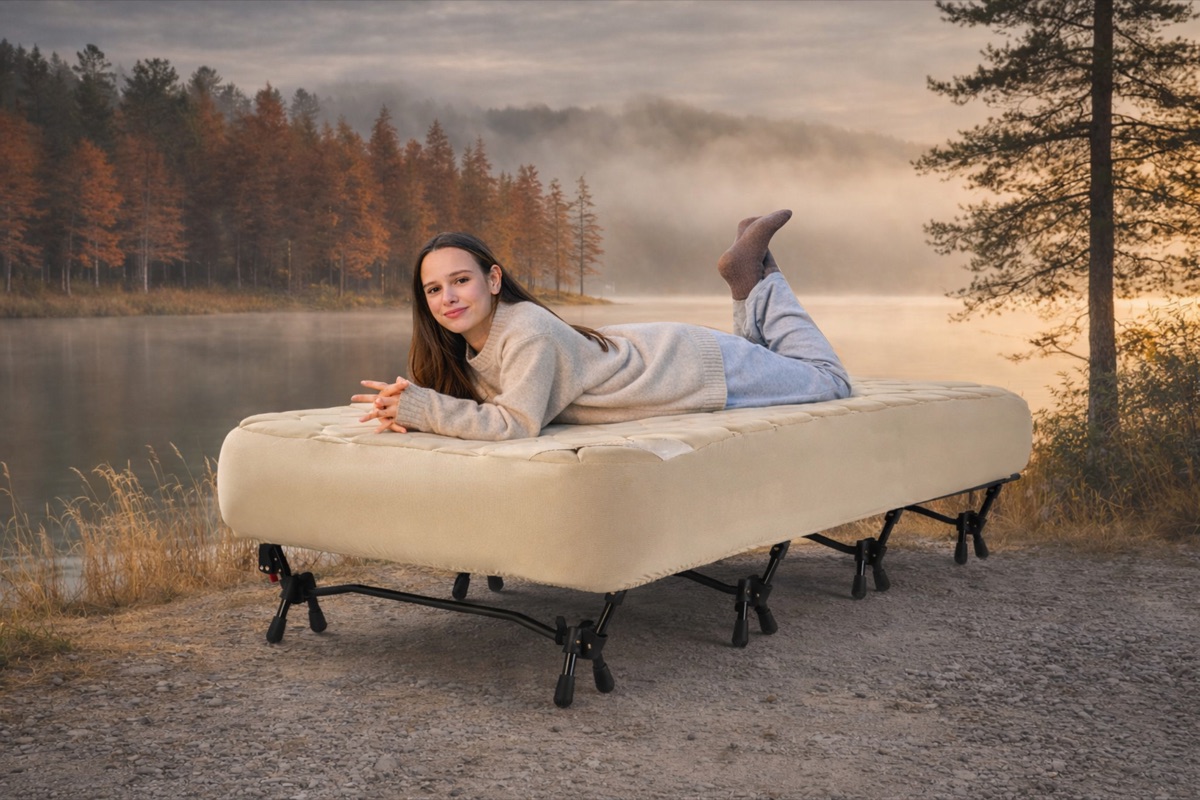
The enclosed vehicle cabin makes TPU's zero-odor property essential. PVC off-gassing in a closed car is uncomfortable at best and a health concern at worst. TPU's lighter weight also matters for trunk storage alongside other gear.
Tent Camping / Backpacking
Winner: TPU
Weight savings of 30% are significant when carrying gear on your back. TPU's cold-weather flexibility is critical for shoulder-season and winter camping. Its superior puncture resistance reduces the risk of damage from roots, stones, and tent floor friction.
Beach / Festival Use
Acceptable: Either (TPU preferred)
For casual warm-weather use where the mattress stays outdoors, PVC is acceptable if budget is the primary constraint. However, TPU's UV resistance means it will not yellow or degrade from sun exposure, making it the better long-term choice.
Home Guest Bed
Winner: TPU
Indoor use amplifies PVC's odor problem. Many consumers report "airing out" PVC air mattresses for 2-3 days before the smell becomes tolerable. TPU has no break-in period — it is odor-free from the first use.
Glamping / Commercial Hospitality
Winner: TPU (essential)
For hospitality operators where guest experience and product longevity matter, TPU is the only professional choice. A glamping resort in Hokkaido, Japan reported using Takibi TPU mattresses for 14 months with 2,000+ guest nights and zero product failures — a durability record that would be impossible with PVC.
Care and Maintenance: TPU vs PVC
Another practical difference between TPU and PVC appears in long-term care requirements:
TPU Maintenance
- Cleaning: Wipe with damp cloth and mild soap. TPU's non-porous surface resists staining and bacterial growth.
- Storage: Deflate fully, fold loosely (avoid sharp creases), store in included carry bag. No special storage requirements — TPU does not degrade in normal storage conditions.
- Repair: Minor punctures can be repaired with included TPU patch kit using heat bonding. Repairs are virtually invisible and permanently airtight.
- UV exposure: TPU has integrated UV stabilizers and can be used in direct sunlight without accelerated degradation.
PVC Maintenance
- Cleaning: Requires more frequent cleaning as PVC surfaces tend to attract dust and can develop sticky residue from plasticizer migration over time.
- Storage: Must be stored in a cool, dry place. Prolonged heat exposure accelerates plasticizer migration. Avoid folding tightly — PVC develops permanent creases more easily than TPU.
- Repair: PVC repairs use solvent-based adhesives (additional chemical exposure). Repairs may not hold as well over time as the surrounding material continues to degrade.
- UV exposure: PVC yellows and becomes brittle with UV exposure. Prolonged outdoor use without UV protection shortens lifespan significantly.
Real-World Performance: Field Testing Results
Beyond laboratory test data, real-world performance is the ultimate measure. Here are documented results from Takibi Outdoor's TPU products in demanding environments:
- Hokkaido Winter Camping (Japan): 14 months continuous use at a glamping resort, temperatures regularly reaching -20°C. 2,000+ guest nights with zero product failures and zero air leakage complaints.
- Australian Outback (Australia): 6 months of car camping use across 15,000+ km of outback travel. Interior temperatures exceeding 55°C with no material softening or deformation.
- Tmall Consumer Reviews (China): 9,000+ units sold with 4.8/5 average rating. Most common positive feedback: zero odor, lightweight, fast inflation, comfortable flat surface.
These real-world results confirm what the laboratory data predicts: TPU is the superior material for any application where durability, comfort, and safety matter.
Industry Trends: The Shift to TPU
The inflatable product industry is experiencing a clear material transition from PVC to TPU, driven by three forces:
- Regulatory pressure: The EU is progressively restricting phthalate plasticizers, with DEHP already banned in children's products. Broader restrictions on PVC additives are expected by 2028.
- Consumer awareness: Online reviews increasingly penalize PVC products for odor and off-gassing. Search volume for "non-toxic air mattress" and "PVC-free air mattress" has grown 240% since 2023.
- Brand differentiation: As TPU becomes more widely available, brands using PVC are losing premium positioning. The material has become a key differentiator in marketing.
Manufacturers who have invested in TPU capabilities — particularly those like Takibi Outdoor who control their own TPU formulation — are best positioned to serve this growing demand.
Conclusion: TPU Is the Future of Inflatable Products
While PVC remains dominant by volume (due to the massive installed manufacturing base), TPU is clearly the superior material for inflatable mattresses across every performance dimension except raw material cost. For any brand, retailer, or distributor focused on quality, safety, and sustainability, TPU should be the default material choice for new product lines.
Takibi Outdoor is the only manufacturer that develops its own proprietary TPU compound from raw materials, providing unmatched quality control and material performance. Contact us for free samples and experience the TPU difference firsthand.
Learn more about how Takibi's TPU technology works, or explore our complete product lineup.
Frequently Asked Questions
Is TPU really better than PVC for inflatable mattresses?
Yes, TPU outperforms PVC in almost every measurable category for inflatable mattress use. TPU is 30% lighter at equivalent strength, has zero chemical odor (no plasticizers needed), maintains flexibility at -30°C (PVC cracks at -10°C), lasts 8-12 years vs 3-5 for PVC, and is fully recyclable. The only advantage PVC holds is lower initial cost — approximately 40-60% cheaper to manufacture. However, when calculated per year of product life, TPU is actually more cost-effective.
Is PVC inflatable mattress toxic?
PVC itself is not acutely toxic, but PVC inflatable mattresses require phthalate plasticizers (typically DEHP or DINP) to remain soft and flexible. These plasticizers slowly off-gas volatile organic compounds (VOCs) — the characteristic "new plastic" smell. Studies have linked prolonged phthalate exposure to endocrine disruption. This is particularly concerning for car mattresses used in enclosed vehicles, or for children's products. TPU requires no plasticizers and is inherently BPA-free, phthalate-free, and formaldehyde-free.
Why are TPU inflatable mattresses more expensive than PVC?
TPU raw material costs are 2-3x higher than PVC resin. Additionally, TPU requires more precise manufacturing equipment — specifically, controlled-temperature extrusion lines and specialized welding techniques. However, TPU mattresses last 2-3x longer (8-12 years vs 3-5 years), making the per-year cost comparable. For B2B buyers, TPU products command higher retail margins (typically 60-80% vs 40-50% for PVC) due to their premium positioning.
Can TPU inflatable mattresses be used in cold weather?
Absolutely. TPU is one of the best materials for cold-weather inflatable products. Per ISO 4675 testing, quality TPU maintains full flexibility and elasticity at -30°C. PVC, by contrast, stiffens below 0°C and becomes brittle at -10°C, leading to cracking and seal failure. Takibi Outdoor's TPU mattresses have been tested through 500+ hours of cold chamber verification at their Ningbo facility and are actively used in Hokkaido (Japan) winter camping.
How do I tell if a mattress is really TPU or just claiming to be?
Three reliable ways to verify: (1) Smell — genuine TPU has zero chemical odor right out of the package, while PVC has a strong plastic smell. (2) Weight — TPU is noticeably lighter than PVC at the same size (a TPU double mattress weighs ~5kg vs ~7kg for PVC). (3) Request SGS or third-party test reports — legitimate TPU manufacturers will readily provide material composition testing showing absence of phthalate plasticizers. Takibi Outdoor provides SGS test reports with every order upon request.
Interested in Takibi Products?
Get factory-direct pricing for TPU inflatable mattresses. We reply within 24 hours.
Request a Quote