How to Choose an Inflatable Car Mattress Supplier: Complete OEM Buyer's Guide
The definitive OEM buyer's guide for sourcing inflatable car mattresses. Learn what to look for in material quality, certifications, factory audits, MOQ, customization, and red flags to avoid.
Why Supplier Selection Makes or Breaks Your Product Line
Choosing the right inflatable car mattress supplier is one of the most consequential decisions for any outdoor brand, Amazon seller, or distribution company entering the car camping market. A great supplier relationship means consistent product quality, reliable lead times, competitive pricing, and the flexibility to grow your product line. A poor supplier choice can result in product returns, negative reviews, compliance issues, and damaged brand reputation.
This guide distills the collective sourcing experience of buyers who have successfully navigated the Chinese inflatable product manufacturing landscape. Whether you are placing your first trial order or looking to upgrade your existing supply chain, this comprehensive checklist will help you evaluate and select the right manufacturing partner.
Step 1: Evaluate Material Quality — The Foundation of Everything
Before evaluating anything else — price, MOQ, lead time — you must understand the manufacturer's material capabilities. The material determines your product's performance, safety profile, longevity, and market positioning.
Questions to Ask Every Potential Supplier:
- "Do you use TPU or PVC?" — This immediately tells you the quality tier. TPU is superior in virtually every metric.
- "Do you produce your own TPU compound, or purchase TPU film?" — Manufacturers who formulate their own TPU (like Takibi Outdoor) have far greater quality control than those buying generic film from third-party suppliers.
- "What are the Shore hardness, tensile strength, and elongation specifications?" — Legitimate manufacturers can quote these numbers instantly. Vague answers indicate lack of material expertise.
- "Can you provide SGS or third-party material composition test reports?" — Essential for verifying TPU claims and confirming absence of phthalates, BPA, and heavy metals.
Material Quality Red Flags:
- Claims of "TPU" but priced at PVC levels (genuine TPU costs 2-3x more than PVC)
- Inability to provide specific material grade or Shore hardness specifications
- No SGS or independent lab test reports available
- Strong chemical odor from product samples (indicates phthalate plasticizers, meaning PVC or PVC-TPU blend)
The Takibi Advantage:
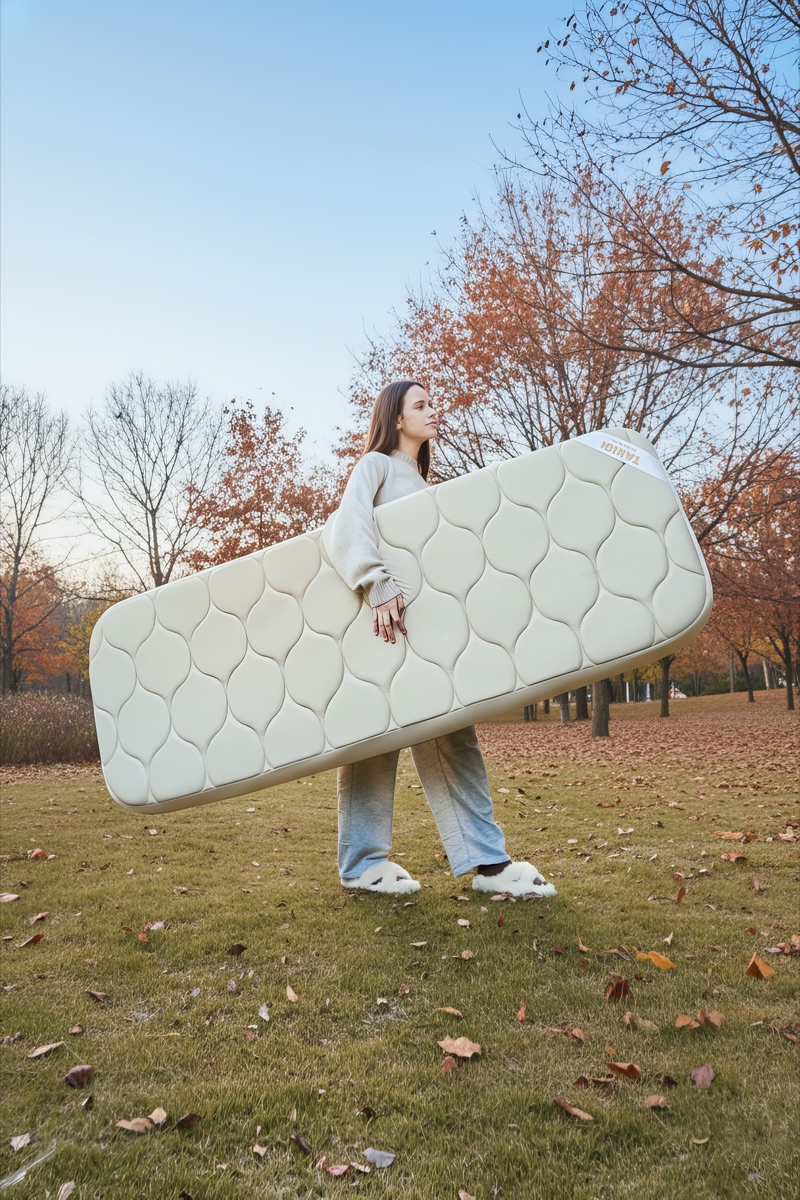
Takibi Outdoor is unique among Chinese manufacturers in that they formulate and extrude their own proprietary TPU compound from raw pellets. This means they control every variable — Shore hardness (85A-95A), tensile strength (>40 MPa), elongation at break (>500%), and cold flexibility (-30°C). They provide full SGS test documentation including REACH, RoHS, and California Proposition 65 compliance reports. Request Takibi's material specification sheet.
Step 2: Verify Certifications — Non-Negotiable for Serious Buyers
Certifications are not just marketing badges — they are legal requirements in most markets and provide third-party verification of product safety claims.
Essential Certifications:
| Certification | What It Covers | Required For |
|---|---|---|
| REACH (EU) | Chemical safety — restricts 200+ substances | EU market (mandatory) |
| RoHS | Restriction of hazardous substances (heavy metals) | EU, UK markets |
| California Prop 65 | No reproductive toxins above threshold levels | California/USA sales |
| SGS Testing | Third-party verification of material composition | All markets (recommended) |
| ISO 9001 | Quality management system | B2B partnerships |
| ASTM D412 | Tensile strength & elongation testing | Material quality verification |
| ISO 4675 | Low-temperature flexibility testing | Cold-weather products |
How to Verify Certifications:
- Request the actual test report PDF — not just a certificate. Reports include specific test data, sample descriptions, and lab reference numbers.
- Verify the testing lab is accredited (SGS, TUV, Intertek, BV are all globally recognized).
- Check that the test report date is recent (within the last 2 years).
- Confirm that the tested product matches what you are ordering — some suppliers test one product and show the report for a different one.
Step 3: Assess the Factory — Capability and Capacity
A factory assessment reveals whether the supplier can consistently deliver quality at the volume you need.
Key Factory Assessment Points:
- Factory size and workforce: A 3,000-5,000m² factory with 30-50 workers can typically handle orders of 500-5,000 units per month. Smaller operations may struggle with consistency at scale.
- Equipment: Look for high-frequency welding lines (for airtight seals), TPU extrusion equipment (if they claim in-house TPU production), and quality testing equipment (burst testers, cold chambers, air-tightness stations).
- Quality control process: Ask for their QC checklist. Reputable manufacturers perform multi-point inspections including air-tightness testing (held at pressure for 24 hours), load testing, weld strength testing, and dimensional verification.
- In-house testing lab: Manufacturers with their own testing equipment can catch quality issues before products ship. Those relying solely on final random inspection are higher risk.
Factory Visit or Virtual Tour:
If you cannot visit in person, request a live video tour via WeChat or WhatsApp. Watch for:
- Organized, clean production floor
- Clearly marked quality inspection stations
- Separate material storage area (TPU film should be stored flat, not folded)
- Testing equipment visible and in use
- Finished product packaging area
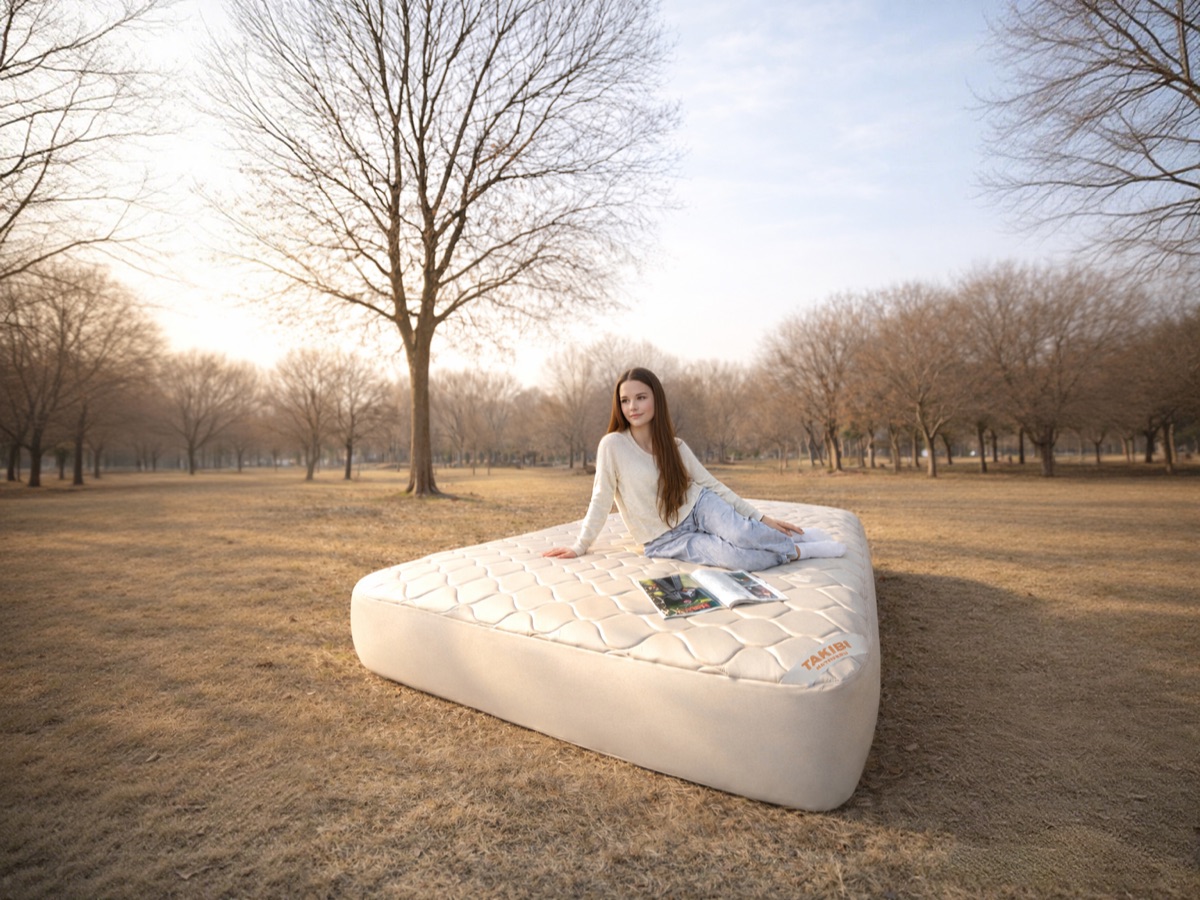
Takibi Outdoor's 3,500m² factory in Ningbo operates 6 high-frequency welding lines, 2 TPU extrusion lines, and a complete QC testing lab with cold chamber, burst testing, and air-tightness verification. They welcome factory visits and provide virtual tours upon request.
Step 4: Evaluate Customization Capabilities — OEM/ODM Services
For brand owners, customization capability separates a mere supplier from a true manufacturing partner.
Levels of Customization:
| Level | Description | Typical MOQ | Lead Time |
|---|---|---|---|
| Logo Only | Your logo printed/embossed on existing product | 100-200 units | 20-25 days |
| Color + Logo | Custom color TPU/PVC with your branding | 200-300 units | 25-30 days |
| Packaging | Custom box, carry bag, instructions | 200-500 units | 25-35 days |
| Size Modification | Modified dimensions to fit specific vehicles | 300-500 units | 30-40 days |
| Full ODM | Completely new product designed to your specs | 500-1,000 units | 45-60 days |
Questions to Ask About Customization:
- Do you have an in-house design team, or do I need to provide production-ready files?
- What is your typical development timeline for a new custom product?
- Do you charge for mold/tooling development? Is it refundable against production orders?
- Can you produce 3D renderings or CAD drawings before sampling?
- What is the maximum print area for logo placement?
Takibi Outdoor offers full OEM/ODM services including custom colors, logo printing (screen print, heat transfer, embossing), packaging design, and new product development. Their design team can work from your specifications or develop new products based on your market requirements. Learn about Takibi's partnership tiers.
Step 5: Negotiate MOQ and Pricing — Strategy and Benchmarks
Understanding MOQ Structure:
MOQ (Minimum Order Quantity) is not arbitrary — it reflects the manufacturer's setup costs for production runs. Here is what drives MOQ levels:
- Material changeover: Switching TPU color or thickness requires purging the extrusion line (wastes material)
- Welding die setup: Each product size requires specific welding dies to be loaded and calibrated
- Print setup: Custom logo printing requires screen or plate preparation
- Packaging changeover: Custom packaging requires separate print runs
MOQ Negotiation Strategies:
- Start with standard products: Order existing models without customization to get the lowest possible MOQ (as low as 20 units at Takibi Outdoor)
- Mix models in one order: Combine different SKUs in a single production run to reach the factory's economic order quantity
- Offer a forecast: Share your projected annual volume — manufacturers are more flexible on initial MOQ if they see long-term potential
- Accept standard packaging initially: Custom packaging often doubles the effective MOQ; start with generic packaging and upgrade later
- Use trial order programs: Quality manufacturers offer formal trial partner programs with reduced MOQ — Takibi's trial partner program starts at 20 units
Pricing Benchmarks (FOB China, 2026):
| Product Type | PVC Price Range | TPU Price Range |
|---|---|---|
| Single car mattress (sedan) | $15-25 USD | $45-70 USD |
| SUV mattress (full cargo area) | $25-40 USD | $60-100 USD |
| Tesla-specific mattress | $30-45 USD | $65-100 USD |
| Camping mattress (double) | $20-35 USD | $55-90 USD |
| Camping mattress (king/triple) | $30-50 USD | $80-120 USD |
If a "TPU" product is priced within the PVC range, it is almost certainly PVC with misleading marketing — or a TPU-PVC blend that does not deliver genuine TPU benefits.
Step 6: Establish Quality Control Processes
Even with the best manufacturer, clear QC expectations are essential.
Pre-Production:
- Approve a production sample before mass production begins
- Confirm material batch test reports for the specific TPU/PVC being used
- Agree on acceptable quality level (AQL) — industry standard is AQL 2.5 for major defects
During Production:
- Request in-line inspection photos/video at key stages (material cutting, welding, inflation testing)
- 100% air-tightness testing — every unit should be inflated and held at pressure for a minimum period
- Load testing on random samples from each production batch
Pre-Shipment:
- Final random inspection using AQL sampling tables
- Dimensional verification against approved sample
- Visual inspection for cosmetic defects
- Packing and labeling verification
Takibi Outdoor performs a 12-point quality inspection on every unit before shipment, including 24-hour air-tightness testing at 10 PSI, load testing, cold-chamber verification, and weld strength testing. Their warranty claim rate is under 0.5% — reflecting this rigorous process.
Step 7: Recognize Red Flags — What to Watch For
Years of sourcing experience have identified these common warning signs:
Communication Red Flags:
- Responds only with generic brochures, not answers to specific questions
- Cannot provide material specifications (Shore hardness, tensile strength)
- Claims "best quality" but cannot cite any test data or certifications
- Reluctant to arrange video call or factory tour
- Only communicates through a trading company with no direct factory contact
Pricing Red Flags:
- Price seems too low for the claimed material quality
- No price difference between "TPU" and "PVC" versions
- Requires 100% payment upfront with no milestone structure
- Sudden price increases after initial agreement
Quality Red Flags:
- Samples arrive with strong chemical odor (indicates phthalate plasticizers in PVC)
- Inconsistent thickness or color across sample units
- Air leakage within 24 hours of inflation
- Welding seams that can be pulled apart by hand
- No batch tracking or lot numbers on products
Legal Red Flags:
- No business license or export license provided
- Refuses to sign a purchase agreement or NDA
- No intellectual property protection — will sell your custom design to other buyers
- No product liability insurance
Complete Supplier Evaluation Checklist
Use this checklist when evaluating any potential inflatable mattress supplier:
| Category | Criterion | Weight |
|---|---|---|
| Material | TPU (proprietary) vs TPU (purchased) vs PVC | 25% |
| Certifications | SGS/REACH/RoHS/Prop 65 with valid reports | 15% |
| Factory | Own factory with QC lab and testing equipment | 15% |
| OEM Capability | Custom design, branding, packaging services | 10% |
| MOQ Flexibility | Trial orders available, reasonable minimums | 10% |
| Export Experience | Active in multiple international markets | 10% |
| Communication | Responsive, transparent, English-capable | 10% |
| Pricing | Competitive for the quality tier offered | 5% |
Step 8: Payment Terms and Logistics
Standard Payment Structure:
- Samples: Full payment before shipping (standard practice)
- Production orders: 30% deposit, 70% before shipping (most common)
- Established relationships: 30% deposit, 70% upon B/L copy (after loading)
- Payment methods: T/T (bank wire), L/C (letter of credit for large orders)
Shipping Options:
| Method | Transit Time | Cost (rough) | Best For |
|---|---|---|---|
| Sea freight (FCL) | 25-35 days | $2,000-4,000/container | Orders filling 20ft+ container |
| Sea freight (LCL) | 30-40 days | $150-300/CBM | Smaller orders |
| Air freight | 5-7 days | $4-8/kg | Urgent/small orders |
| Express (DHL/FedEx) | 3-5 days | $6-12/kg | Samples, very small orders |
Incoterms:
Most Chinese manufacturers quote FOB (Free on Board) prices, meaning they deliver goods to the port and handle export customs. The buyer is responsible for ocean freight, insurance, and import customs. Some manufacturers can quote CIF (Cost, Insurance, Freight) or DDP (Delivered Duty Paid) for buyers who prefer all-inclusive pricing.
Conclusion: Building a Successful Supplier Partnership
The most successful buyer-supplier relationships in the inflatable product industry are built on three pillars: material quality verification, transparent communication, and aligned growth expectations.
Start with samples from 2-3 manufacturers. Compare material quality (smell test, weight, feel), construction quality (seam strength, air retention), and communication responsiveness side by side. The best manufacturers — like Takibi Outdoor — make this evaluation process easy by proactively providing test reports, factory tour access, and trial order programs.
Once you have identified the right partner, invest in the relationship. Share your market feedback, sales data, and growth plans. The best Chinese manufacturers are eager to develop custom products and grow alongside their international partners.
Ready to start? Contact Takibi Outdoor for a free product catalog, material specification sheets, and trial order pricing. Or learn more about our dealer partnership program.
Frequently Asked Questions
What is the most important factor when choosing an inflatable car mattress supplier?
Material quality is the single most important factor. Specifically, whether the supplier uses TPU or PVC, and whether they produce their own material or purchase it from third parties. A supplier who controls their own material formulation (like Takibi Outdoor with their proprietary TPU compound) can guarantee consistent quality across every production batch. Suppliers who purchase generic materials from rotating vendors may deliver inconsistent quality.
How do I verify a Chinese inflatable mattress manufacturer is legitimate?
Follow these verification steps: (1) Request their business license and export license. (2) Ask for SGS or TUV certification reports — not self-issued certificates. (3) Request a factory video tour or schedule an in-person audit. (4) Order samples before committing to production orders. (5) Check if they exhibit at trade shows (Canton Fair, Tokyo Outdoor Show). (6) Ask for references from existing international clients. (7) Verify their Alibaba Gold Supplier status or Made-in-China verified seller badge if applicable.
What MOQ should I expect for custom-branded inflatable car mattresses?
MOQ varies by customization level. For standard products with your logo on existing models: 100-200 units per SKU at most quality manufacturers. For custom sizes, colors, or packaging: 200-500 units. For completely custom-designed products (new molds, unique dimensions): 300-1,000 units. Some premium manufacturers like Takibi Outdoor offer trial orders as low as 20 units for their standard product range, allowing buyers to test the market before committing to larger orders.
What are the biggest red flags when sourcing from Chinese mattress manufacturers?
Watch for these warning signs: (1) Unusually low pricing that seems too good to be true — often indicates inferior materials or bait-and-switch tactics. (2) No willingness to provide SGS or third-party test reports. (3) No factory photos or videos, only product photos. (4) Claiming "TPU" but priced at PVC levels. (5) No export experience or references from international clients. (6) Pressure to pay 100% upfront with no milestone payments. (7) Unwillingness to send samples before production order. (8) Communication only through trading company intermediaries with no direct factory access.
How long does the OEM process typically take from first contact to delivery?
The typical OEM timeline is: Initial inquiry and quotation (1-3 days), sample production (5-7 days), sample shipping and evaluation (7-14 days), design confirmation and deposit (3-5 days), production (20-45 days depending on volume), quality inspection (2-3 days), and shipping (15-30 days by sea, 5-7 days by air). Total timeline from first contact to receiving goods: approximately 2-3 months for a standard order, or 3-4 months for fully custom products requiring new molds or designs.
Interested in Takibi Products?
Get factory-direct pricing for TPU inflatable mattresses. We reply within 24 hours.
Request a Quote